🏫 Curriculum Alignment
Suitable for levels: Higher Primary / Lower Secondary
📖 Anatomy and Physiology 2e (Betts et al., OpenStax) CC BY 4.0
Core anatomical descriptions adapted from Betts, J.G. et al. (2022). Anatomy and Physiology 2e. OpenStax / Rice University.
🔗 CC BY 4.0, verified against a local copy (downloaded Dec 2025; fully re-verified 24 Aug 2026 against a complete, 100%-coverage export — no restrictive exceptions found). Archived snapshot: web.archive.org, 1 Dec 2025. The live OpenStax page has since changed to CC BY-NC-SA — this citation relies on the local copy + archived snapshot, not the live page.
🫁 Lungs Hotspot Content — Anatomy and Physiology II at Cambrian College CC BY 4.0
First Level, Third Level, and Fourth Level lungs hotspot descriptions adapted from Anatomy and Physiology II at Cambrian College by L. Kabaroff (Cambrian College / eCampus Ontario Pressbooks).
🔗 CC BY 4.0, verified against a local copy, 100% coverage, no restrictive exceptions found within its 9-chapter scope (25 Aug 2026). Archived snapshot: web.archive.org, 13 Jun 2026
🫁 Supporting Respiratory Reference — Human Anatomy & Physiology CC BY 4.0
Additional respiratory system wording supported by Human Anatomy & Physiology by D. Anderson (Minnesota State Colleges and Universities).
🔗 CC BY 4.0, verified against a local copy (25 Aug 2026). Archived snapshot: web.archive.org, 27 Aug 2026
📖 NSCC Human Biology CC BY 4.0
First Level Info panel content across the anatomy topics adapted from Langille, R., adapter. (2020). NSCC Human Biology. Nova Scotia Community College. Adapted from Concepts of Biology – 1st Canadian Edition by Molnar & Gair (BCcampus, CC BY 4.0), itself adapted from OpenStax Concepts of Biology (CC BY 4.0).
🔗 CC BY 4.0, verified against a local copy, 100% coverage, no exceptions found anywhere in the book (24 Aug 2026). Archived snapshot: web.archive.org, 14 Jun 2026
📖 Concepts of Biology — 1st Canadian Edition CC BY 4.0
Third Level Info panel content across the anatomy topics adapted from Molnar, C. & Gair, J. (2015). Concepts of Biology – 1st Canadian Edition. BCcampus. Adapted from Concepts of Biology © 2013 by OpenStax (CC BY 4.0).
🔗 CC BY 4.0, verified against a local copy, 100% coverage (24 Aug 2026). 3 individual figures (Stromatolites, a cell-division diagram, a scale-bar diagram) are CC BY-SA and excluded from reuse. Archived snapshot: web.archive.org, 13 Jun 2026
🌐 Wikipedia — The Free Encyclopedia CC BY-SA 4.0
Supplementary biological facts from Wikipedia.
🔗 en.wikipedia.org — CC BY-SA 4.0
🏴 Scottish Government & NHS Scotland OGL v3.0
Health and biological science information from Scottish Government and NHS Scotland.
🔗 gov.scot | nhsinform.scot — OGL v3.0
📖 Biology 2e — Second Level Content CC BY 4.0
Second Level content (Info panel, quiz, hotspot text, and games) added 16 Sep 2026 for Heart, Lungs, Digestive, Skeleton, Brain, Eye and Kidney, aligned to Education Scotland's officially published Sciences Benchmarks (March 2017): SCN 2-12a (Respiratory, Circulatory, Digestive and Skeletal systems — function and preventable health risks) and SCN 2-12b (sensory organs, for Eye). Nervous (Brain) and Excretory (Kidney) systems are not among the 5 body systems the Benchmarks name for Second Level study; their Second Level content is built as bridging extension content instead. Factual content adapted from Biology 2e (Clark, Choi & Douglas; OpenStax/Rice University, 2018) — the same source already cited above for this app's Genetics content.
🔗 education.gov.scot — Sciences Benchmarks — Open Government Licence v3.0; Clark, M.A., Choi, J. & Douglas, M. (2018). Biology 2e. OpenStax / Rice University — CC BY 4.0, verified against a local copy (downloaded Dec 2025; fully re-verified 24 Aug 2026 against a complete, 100%-coverage export — 4 individual figures in the Protista chapter are CC BY-SA and excluded from reuse, no other exceptions found). Archived snapshot: web.archive.org, 12 Dec 2025. The live OpenStax page has since changed to CC BY-NC-SA — this citation relies on the local copy + archived snapshot, not the live page.
🎮 Game Mode — Digestive, Skeleton, Eye and Kidney See individual credits below
Game Mode (Label Match, Spot the Part and Picture Puzzle) added 17 Sep 2026 for Digestive, Skeleton, Eye and Kidney — previously "Coming Soon" for these topics. Label Match and Spot the Part fact content reuses each topic's own already-cited per-level source rotation from its Info panel (NSCC Human Biology → Biology 2e → Concepts of Biology – 1st Canadian Edition → Anatomy and Physiology II at Cambrian College, all CC BY 4.0 — see entries above), so no new sourcing was introduced for the fact text. Picture Puzzle images are adapted from each topic's own 3D model, rendered and supplied by the owner via Google Drive specifically for this game (17 Sep 2026) — same visual source as this app's existing marker/gallery imagery for these topics, not independently drawn. Aligned to Education Scotland's officially published Sciences Benchmarks (March 2017) where a match exists: SCN 1-12a/1-12b (First), SCN 2-12a/2-12b (Second, Eye only, no match for Kidney — the excretory system isn't among the 5 Second Level body systems the Benchmarks name), SCN 3-12a (Third, Digestive/Skeletal/Excretory all explicitly named — including Kidney). Kidney's Fourth Level Game Mode content is newly aligned to SCN 4-12a, which explicitly names "the kidneys" in its water-balance/homeostasis example — a better-sourced result than this topic's existing Info panel assumed, confirmed against the Benchmarks text this session. Fourth Level content for Digestive/Skeleton/Eye remains sourced but not benchmark-coded, the same disclosed pattern already used for this topic set's Info panel content.
🧊 Heart 3D Model Inspection — Sketchfab CC BY 4.0
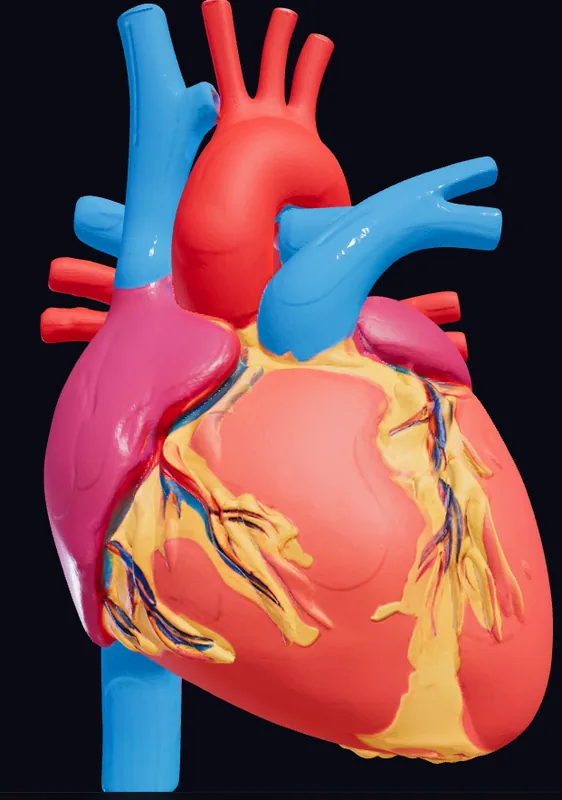
Interactive 3D heart with clickable valve hotspots, built as an in-house viewer using the same model across all levels (hotspot text varies by tier), adapted from "Beating-heart" by jalmer on Sketchfab — CC BY 4.0.
🔗 Beating-heart — jalmer, Sketchfab
Hotspot content (Tricuspid, Mitral/Bicuspid, Pulmonary, and Aortic valves) adapted from Kabaroff, L. Anatomy and Physiology II at Cambrian College, Ch. 19 — CC BY 4.0.
👁️ Eye & Kidney Hotspot Content — Introductory Animal Physiology CC BY 4.0
Eye and Kidney Model Inspection hotspot text adapted from Hinic-Frlog, S., Hanley, J. & Laughton, S. Introductory Animal Physiology (2nd ed.). University of Toronto Mississauga / eCampus Ontario.
🔗 CC BY 4.0, verified against a local copy, 100% coverage, all 9 chapters, no exceptions found anywhere in the book (24 Aug 2026). Archived snapshot: web.archive.org, 14 Jun 2026
🧊 Eye 3D Model Inspection — Sketchfab CC BY 4.0
Interactive 3D eye with clickable hotspots, built as an in-house viewer using the same model across all levels (hotspot text varies by tier), adapted from "Biology: A human eye" by illarionov.school on Sketchfab — CC BY 4.0.
🔗 Biology: A human eye — illarionov.school, Sketchfab
Hotspot content (Cornea, Iris & Pupil, Lens, Retina, Optic Nerve, Fovea) adapted from Hinic-Frlog, S. et al. Introductory Animal Physiology, Ch. 8.3 — CC BY 4.0.
🧊 Kidney 3D Model Inspection — Sketchfab CC BY 4.0
Interactive 3D kidney with clickable hotspots, built as an in-house viewer using the same model across all levels (hotspot text varies by tier), adapted from "Kidney" by cgmac on Sketchfab — CC BY 4.0.
🔗 Kidney — cgmac, Sketchfab
Hotspot content (Cortex, Fibrous Capsule, Ureter, Renal Artery, Renal Vein) adapted from Hinic-Frlog, S., Hanley, J. & Laughton, S. Introductory Animal Physiology (2nd ed.), Ch. 4.2 — Ion and Water Balance on Land. University of Toronto Mississauga / eCampus Ontario — CC BY 4.0.
🧊 Digestive System & Skeleton 3D Model Inspection — Sketchfab CC BY 4.0
Model Inspection added 17 Sep 2026 — previously "Coming Soon" for both topics. Base models owner-sourced (17 Sep 2026): Digestive System adapted from "Digestive System" by jrdnether on Sketchfab (CC BY 4.0); Skeleton adapted from "Skeleton" by Djordr on Sketchfab (CC BY 4.0). Both models export with generic, non-anatomical mesh names. Skeleton's 6 hotspots are still placed by anatomical-proportion estimate against the model's real measured geometry rather than by mesh name — a reasonable first pass, refinable by eye against the live render. Digestive's original 6 hotspots used that same estimate approach but were found visually incorrect and reset (19 Sep 2026); its 7 hotspots (Oesophagus, Stomach, Liver, Pancreas, Small Intestine, Large Intestine, and Rectum, newly added) were re-placed 20 Sep 2026 via the live admin calibration tool, each position a direct raycast hit against the rendered mesh rather than an estimate. Hotspot text reuses each topic's own already-cited per-level source rotation (NSCC Human Biology → Biology 2e → Concepts of Biology – 1st Canadian Edition → Anatomy and Physiology II at Cambrian College, all CC BY 4.0 — see entries above), so no new sourcing was introduced for the fact content, including Rectum's.
🔗 Digestive System — jrdnether, Sketchfab
🔗 Skeleton — Djordr, Sketchfab
🧊 Lungs 3D Model Inspection — Sketchfab CC BY 4.0
Model Inspection added 17 Sep 2026 — previously "Coming Soon". Base model owner-sourced (17 Sep 2026), adapted from "Realistic Human Lungs" by neshallads on Sketchfab (CC BY 4.0). The model has 2 mesh objects rather than 4 named parts, so the 4 hotspots below (matching this topic's existing Game Mode content) are placed at estimated points along the model's real measured vertical extent in anatomical order, not by mesh boundary. Hotspot text reuses this topic's own already-cited sources (Anatomy and Physiology II at Cambrian College; Human Anatomy & Physiology, D. Anderson) — no new sourcing.
🔗 Realistic Human Lungs — neshallads, Sketchfab
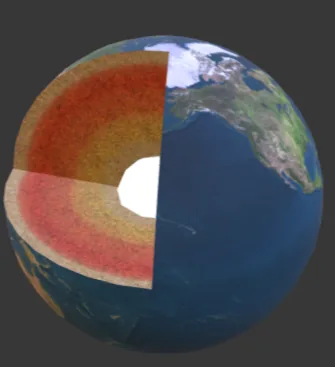
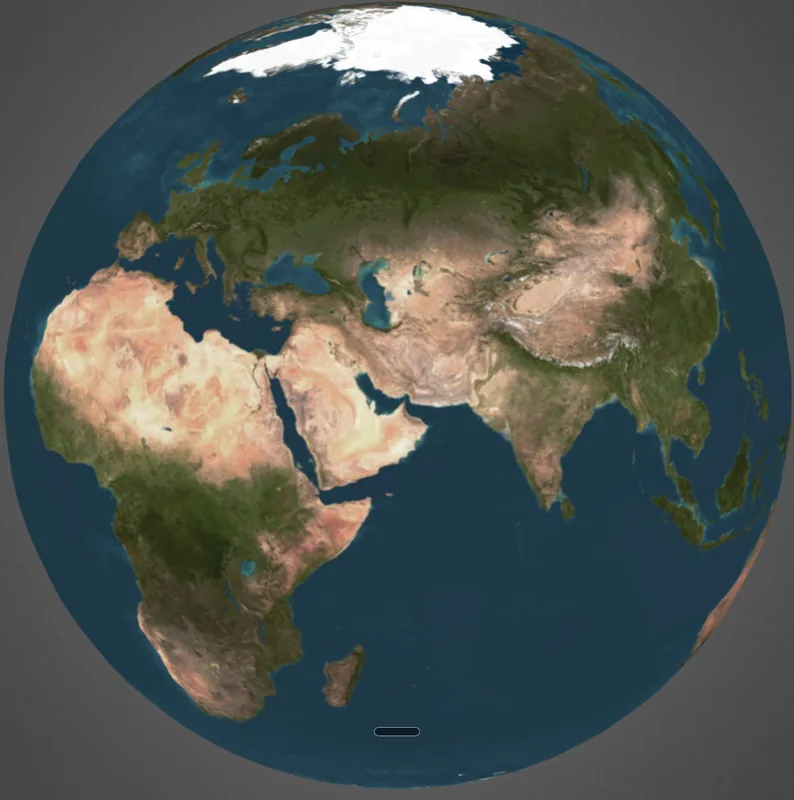
🧊 Earth Science 3D Model Inspection — reused from Solar System CC BY 4.0
Model Inspection added 17 Sep 2026 — previously "Coming Soon". Per the owner's explicit instruction, this is a direct reuse of Solar System's own Earth Model Inspection tab: same GLB, same 3 hotspots (Land and Water, Ice at the Poles, Different Places Different Climates), same 4-level text, same source. No new model, sourcing, or hotspot placement work for this topic. No dedicated Curriculum Code fits this content cleanly for the standalone Earth Science topic — it was originally scoped under Solar System's Space strand, and this topic's own Second Level match (SCN 2-05a, the water cycle) doesn't cover land/water distribution, polar ice or climate zones specifically, so no code is claimed here.
🔗 Earth — SketchFabKingTrainer, Sketchfab — CC BY 4.0; hotspot content adapted from NASA Earth Observatory and NOAA Climate.gov, U.S. Government Public Domain (see entries above).
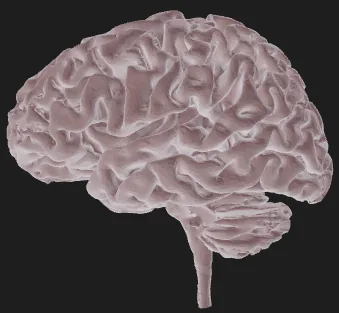
🧠 Brain 3D Model Inspection CC BY
Model Inspection added 17 Sep 2026, once the owner confirmed the base model was already hosted at this topic's existing glb: URL. "Brain Model" (Atrophic Human Brain, generated from MRI data) by Nevit Dilmen, NIH 3D Print Exchange, entry 3DPX-002386 — the only base model in this app not sourced from Sketchfab. This single-mesh model carries no root rotation matrix (unlike every Sketchfab-sourced model here), so its "up" axis was confirmed empirically by rendering it from 3 axis-aligned angles rather than assumed. No mesh-name or per-region geometry is available, so the 6 hotspots (matching this topic's existing Game Mode content) are placed by anatomical-proportion estimate along the confirmed vertical axis — the least-confident placements in this app; worth an extra check against the live render.
🔗 3DPX-002386 — Nevit Dilmen, NIH 3D Print Exchange — CC BY. Hotspot content adapted from Anatomy and Physiology II at Cambrian College (Kabaroff, 2023), CC BY 4.0 — see entry above.
🌍 NASA Earth Observatory Public Domain
Earth science descriptions from NASA Earth Observatory (NASA Goddard Space Flight Center).
🔗 earthobservatory.nasa.gov — U.S. Government Public Domain
🚀 NASA Science: Earth Science Public Domain
Planetary facts, Earth structure, and magnetic field information sourced from NASA Science's Earth Science portal.
🔗 science.nasa.gov/earth-science — U.S. Government Public Domain
🌦️ NOAA Climate.gov Public Domain
Climate science information sourced from NOAA Climate.gov, published by the National Oceanic and Atmospheric Administration.
🔗 climate.gov — U.S. Government Public Domain
🌐 TOPS-T SCHOOL (NASA/Columbia University) CC BY 4.0
Systems thinking and Earth sphere interaction content adapted from TOPS-T SCHOOL, a collaborative educational resource by NASA and Columbia University.
🔗 tops-school.org — CC BY 4.0
📍 EarthScope/GAGE Facility CC BY 4.0
Geosphere and Earth structure content adapted from EarthScope Consortium's GAGE Facility educational resources.
🔗 earthscope.org — CC BY 4.0
📖 Environmental Science — Second Level Content CC BY 4.0
Second Level content (water cycle, Info panel and quiz) added 16 Sep 2026, aligned to Education Scotland's officially published Sciences Benchmarks (March 2017), SCN 2-05a ("Processes of the planet" — the water cycle). Factual content adapted from Environmental Science (Sean Whitcomb, ed.; Maricopa Open Digital Press, 2021), CC BY 4.0 International.
🔗 education.gov.scot — Sciences Benchmarks — Open Government Licence v3.0; Whitcomb, S., ed. Environmental Science. Maricopa Open Digital Press — CC BY 4.0, verified against a local copy, 100% coverage (24 Aug 2026; independently confirmed via external PDF audit 25 Aug 2026). One whole chapter (Water) is CC BY-NC-SA and excluded from reuse; the water-cycle content cited here is drawn from clean, CC BY sections. Archived snapshot: web.archive.org, 14 Jun 2026
🎥 NASA SVS — Earth from Space Video Public Domain
Earth video from NASA Scientific Visualization Studio (SVS #14318). Music: "Earth, Our Home" by Henry Dehlinger.
🔗 svs.gsfc.nasa.gov/14318 — U.S. Government Public Domain
🪐 Solar System — How This Asset Is Sourced Methodology
Two different Education Scotland resources play two different, deliberately separate roles here. Neither is treated as interchangeable with the other:
The CIC Draft Technical Framework (see next entry) is used only to decide scope and structure — which topics belong together and how separate strands connect. For example, it's the reason Solar System composition (the Sun and eight planets), stars/galaxies/the Milky Way, and space-exploration technology are taught as one coherent "Space" topic here, rather than as isolated, unrelated facts — the currently-published Benchmarks don't do this grouping themselves, since they're organised by individual outcome code rather than by topic. CIC is a draft, shared for co-design, and is expected to change.
No factual statement in this content is drawn from CIC's own wording. Every fact is adapted from a CC BY-licensed textbook (see the entries below) and, wherever a specific outcome code applies, cross-checked against Education Scotland's officially published Sciences Benchmarks (March 2017) — the current, non-draft standard. Where CIC and the official Benchmarks cover the same ground (e.g. seasons, Moon phases), the official Benchmarks' more detailed wording is what's actually followed for content accuracy, since it's more specific there than the CIC draft text.
Together: CIC tells us what belongs in this topic and why; the official Benchmarks and the cited textbooks tell us what's actually true and how precisely to say it.
🤝 Solar System — Collaboration Attribution
This topic's structure — Part 1 (Sun, Earth & Moon), Part 2 (Protecting Our Planet) and Part 3 (Space Exploration) — was developed in collaboration with North Lanarkshire Council's own Space unit plan. The specific wording, activities and citations throughout this topic are independently written and sourced from the Education Scotland Benchmarks and the CC BY-licensed textbooks cited below.
🪐 Solar System — CIC Draft Technical Framework, Sciences OGL v3.0, DRAFT (at time of access)
Used for topic scope and cross-strand integration only (see "How This Asset Is Sourced" above) — Solar System composition, stars/galaxies/Milky Way framing, and tying together SCN 1-06a, SCN 1-04a-adjacent Sun-as-energy-source content, and TCH 1-05a into one Space topic. Adapted from Education Scotland (2026). Curriculum Improvement Cycle Technical Framework — Sciences, Space strand, First Level. Draft, shared for co-design during the 2026/27 engagement period — subject to change.
No link — this is an unpublished draft with no live or archived public URL to cite. Content here is EdSpaceXR's own adaptation, not Education Scotland's.
🪐 Solar System — Astronomy CC BY 4.0 (at time of access)
Seasons and Moon-phases content — satisfies the official SCN 1-06a Benchmark (axial tilt causing seasons and changing daylight hours; explaining why the Moon's phases occur) — adapted from Fraknoi, A., Morrison, D. & Wolff, S.C. (2016). Astronomy (BCcampus adaptation). OpenStax / Rice University. Ch. 4 "Earth, Moon, and Sky" — "The Seasons", "Phases of the Moon".
🔗 Archived snapshot (26 Aug 2026) — CC BY 4.0 (verified via archived snapshot and local copy, both dated; the live openstax.org site has since relicensed new downloads as CC BY-NC-SA — this citation does not link to the live site)
🪐 Solar System — Astronomy CC BY 4.0 (at time of access)
Space exploration and space telescopes content — satisfies the official TCH 1-05a and SCN 1-20a Benchmarks — adapted from Fraknoi, A., Morrison, D. & Wolff, S.C. (2016). Astronomy (BCcampus adaptation). OpenStax / Rice University. Ch. 3 "Orbits and Gravity" — "Motions of Satellites and Spacecraft"; Ch. 6 "Astronomical Instruments" — "Observations outside Earth's Atmosphere".
🔗 Archived snapshot (26 Aug 2026) — CC BY 4.0 (verified via archived snapshot and local copy, both dated; the live openstax.org site has since relicensed new downloads as CC BY-NC-SA — this citation does not link to the live site)
🪐 Solar System — Astronomy (Planets) CC BY 4.0 (at time of access)
"Order the Planets" game content (each planet's one-line description) — adapted from Fraknoi, A., Morrison, D. & Wolff, S.C. (2016). Astronomy (BCcampus adaptation). OpenStax / Rice University. Ch. 9 "Cratered Worlds" (Mercury); Ch. 10 "Earthlike Planets: Venus and Mars" (Venus, Mars); Ch. 11 "The Giant Planets" (Jupiter, Uranus, Neptune); Ch. 12 "Rings, Moons, and Pluto" (Saturn's rings). Each fact was traced to the actual chapter text before writing, not assumed from general knowledge.
🔗 Archived snapshot (26 Aug 2026) — CC BY 4.0 (verified via archived snapshot and local copy, both dated; the live openstax.org site has since relicensed new downloads as CC BY-NC-SA — this citation does not link to the live site)
🪐 Solar System — Second, Third and Fourth Level Content OGL v3.0 / CC BY 4.0
Second, Third and Fourth Level content (Info panel, quiz, hotspot text, and Moon Phases/Order the Planets/Space Timeline games) added 16 Sep 2026, aligned to Education Scotland's officially published Sciences Benchmarks (March 2017) — the "Space" organiser's Second, Third and Fourth Level outcomes: SCN 2-06a (planet features, scale models, eclipses), SCN 3-06a (reasoned argument on the likelihood of life elsewhere), and SCN 4-06a (how observing technology has changed our knowledge of the universe). Factual content adapted from the same Astronomy (Fraknoi, Morrison & Wolff; OpenStax/BCcampus adaptation, 2016) textbook already cited above for this topic's First Level content — no new source introduced.
🔗 education.gov.scot — Sciences Benchmarks — Open Government Licence v3.0; Archived snapshot (26 Aug 2026) — CC BY 4.0
🧩 Solar System — Space Jigsaw Images See individual credits below
The "Space Jigsaw" game reuses 3 images already credited elsewhere on this page — no new sourcing for this game. Solar System: NASA/JPL, via Wikimedia Commons, U.S. Government Public Domain (same image as this topic's own gallery card — see "Solar System — Image Target" above). Earth and Moon: adapted from the same two CC BY 4.0 Sketchfab models already used for this topic's own Model Inspection tabs — see "Solar System — 3D Model (Model Inspection)" and "Solar System — 3D Model (Model Inspection, Earth)" above for the original model credits.
🪐 Solar System — Environmental Issues CC BY 4.0 (at time of access)
Fossil fuels and reduce/reuse/recycle content — satisfies the official TCH 1-06a, TCH 1-07a and SCN 1-20a Benchmarks — adapted from Frank, A. Environmental Issues. BCcampus Pressbooks / Kwantlen Polytechnic University Environmental Protection Faculty. Current edition, accessed 27 Aug 2026.
🔗 Archived snapshot (27 Aug 2026) — CC BY 4.0 (verified via archived snapshot and local copy, both dated)
🚀 Solar System — NASA Public Domain
Pale Blue Dot / Voyager 1 content and climate-change content (Model Inspection cards and quiz) are adapted from NASA's own public-domain pages. Apollo 11, Hubble Space Telescope and International Space Station content (Model Inspection cards and quiz) are likewise independently written from NASA's public mission history — this session confirmed those pages exist via search rather than citing an individual link for each.
🔗 nasa.gov — Solar System Portrait: Earth as ‘Pale Blue Dot’; science.nasa.gov — What Is Climate Change? — U.S. Government Public Domain
🖼️ Solar System — Space Exploration Photos (Moon & Earth cards) Public Domain
Four photographs used in the “Humans on the Moon” and “Watching Earth From Space” Model Inspection cards, all U.S. Government public domain, sourced via Wikimedia Commons:
• Sputnik 1 replica exhibit (cropped from the original) — U.S. Air Force photo, National Museum of the United States Air Force
• Lunar surface during an Apollo Moon landing — NASA / John Young, Apollo 16, photo AS16-113-18296 (used generically, not captioned as Apollo 11, since it's a different mission from the one described in the card's text)
• Hubble Solar Array Deployment, STS-31 — NASA, photo STS031-76-026 / KSC-90PC-2150, 25 April 1990
• International Space Station, photographed during STS-110 — NASA
None of these images use NASA logos, seals, insignia or logotypes, and none imply NASA endorsement or sponsorship of this app.
🔗 Sputnik 1; Apollo 16 lunar surface; Hubble deployment; ISS — all Public Domain
🖼️ Solar System — Pale Blue Dot Photo ("Our Unique Earth" card) NASA/JPL-Caltech
The photo in the “Our Unique Earth” card — Earth as a single point of light, photographed by Voyager 1 on 14 February 1990 (Photo ID PIA00452) — is the original 1990 release, not the 2020 reprocessed 30th-anniversary version (PIA23645). Credit: NASA/JPL-Caltech, under the JPL Image Use Policy (free use for any purpose with credit; commercial use permitted; no implied endorsement). No identifiable people in the image. This replaced an earlier CSS-only starfield illustration once a genuine public-domain photo was sourced and verified.
🔗 jpl.nasa.gov — Solar System Portrait: Earth as ‘Pale Blue Dot’ (PIA00452); jpl.nasa.gov — JPL Image Use Policy
🌊 Solar System — NOAA Public Domain
Litter and ocean-plastic content (“Looking After Our Ocean” Model Inspection card) is adapted from the National Oceanic and Atmospheric Administration's Marine Debris Program and Ocean Pollution educational resources — this session confirmed these pages exist via search rather than citing an individual link for a specific fact. The card's photo (plastic bottle caps collected from Midway Atoll, NOAA PIFSC) is likewise U.S. Government public domain, via the NOAA Marine Debris Program.
🔗 noaa.gov — Ocean Pollution and Marine Debris; marinedebris.noaa.gov — For Educators; marinedebris.noaa.gov — Plastic Bottle Caps (photo source) — U.S. Government Public Domain
📋 Solar System — Left Out From the NLC First Level Plan (So Far) Tracking
All three NLC First Level Space parts are now built (Sun/Earth/Moon; Protecting our Planet; Space Exploration). Update, 3 Sep 2026: the one gap this entry used to track — litter and ocean/plastic pollution, a theme in the NLC session plan's "Looking after our planet" sessions — is now closed, via the "Looking After Our Ocean" Model Inspection card. The three V53 book records originally checked (Environmental Issues, Introduction to Oceanography, Environmental Biology) still don't cover it in a form suitable for adaptation; it was ultimately sourced from NOAA's Marine Debris Program instead, a public-domain U.S. government source outside the V53 book shelf — the same kind of source that closed the separate climate-change gap. No other content gaps against NLC's Key Learning list are currently tracked. The NLC session plan's own pedagogy (jigsaw groups, base-group note-taking, extended-writing genre work) isn't reflected here, by design — that's classroom delivery mechanics, not app content.
🌱 Ecology — OpenStax Biology 2e CC BY 4.0 (at time of access)
Ecology content (food chains, food webs, biodiversity, trophic levels) adapted from Clark, M.A., Choi, J. & Douglas, M. (2018). Biology 2e. OpenStax / Rice University. Ch. 44, Section 46.2, Ch. 47.
🔗 Archived snapshot (12 Dec 2025) — CC BY 4.0 (verified via archived snapshot and local copy, both dated; the live openstax.org site has since relicensed new downloads as CC BY-NC-SA — this citation does not link to the live site)
🌾 Ecology — Food Production, Biomes & Competition CC BY 4.0
Food security, crops, fertilisers, pollination, biomes and competition content adapted from Fisher, M.R. (2021). Environmental Biology (Original Edition). Open Oregon Educational Resources, Ch. 3–5.
🔗 CC BY 4.0 (except where otherwise noted), verified against a local copy (fresh evidence package captured 27 Aug 2026, byte-identical to the retained PDF). Archived snapshot: web.archive.org, 27 Aug 2026
🧊 Ecology 3D Model Inspection — Sketchfab CC BY 4.0
Interactive 3D food web with clickable hotspots, built as an in-house viewer using the same model across all levels (hotspot text varies by tier), adapted from "food web" by isparklekidz on Sketchfab — CC BY 4.0.
🔗 food web — isparklekidz, Sketchfab
Hotspot content (Grass, Hare, Zebra, Lion, Ants, Hyena, Dead Animals) adapted from Fisher, M.R. Environmental Biology. Open Oregon Educational Resources (Ch. 3–5) — CC BY 4.0.
🐢 Ocean Ecosystems — Curriculum Alignment OGL v3.0
Content aligned to Education Scotland's Sciences Benchmarks (March 2017), "Biodiversity and interdependence" organiser, across all 4 levels this topic now covers: First Level (SCN 1-01a, SCN 1-02a — living/non-living, food chains), Second Level (SCN 2-01a, SCN 2-02a — classification, food webs), Third Level (SCN 3-01a, SCN 3-02a — biodiversity sampling, photosynthesis) and Fourth Level (SCN 4-01a — interdependence, population/biodiversity impact).
🔗 education.gov.scot — Sciences Benchmarks — Open Government Licence v3.0
🌊 Ocean Ecosystems — Introduction to Oceanography OER register, CLEAR WITH EXCEPTIONS
Marine-biology and ocean-ecosystem facts (habitats, producers, predators) adapted from Webb, P. Introduction to Oceanography. Roger Williams University (living document; last updated August 2023).
🔗 CC BY 4.0, verified against a local copy, figure-by-figure re-verified 24 Aug 2026 (44 individual figures are CC BY-SA and 3 are non-commercial-only, all excluded from reuse; the book's own preface notes it intentionally omits marine ecology/marine-communities content, so this topic's ecosystem facts are cross-checked against the clean, non-excepted chapters). Archived snapshot: web.archive.org, 24 Aug 2026
🌊 Ocean Ecosystems — NOAA Marine Debris Program Public Domain
Ocean litter/conservation content adapted from NOAA's Marine Debris Program (same source already cited for Solar System's own "Looking After Our Ocean" card).
🔗 marinedebris.noaa.gov — For Educators — U.S. Government Public Domain
🧬 Genetics — Educational Content CC BY 4.0
Genetics content (DNA, chromosomes, Mendelian inheritance, Punnett squares) adapted from OpenStax Biology 2e (Rice University) and the UK National Curriculum Sciences.
🔗 Clark, M.A., Choi, J. & Douglas, M. (2018). Biology 2e. OpenStax / Rice University — CC BY 4.0, verified against a local copy (downloaded Dec 2025; fully re-verified 24 Aug 2026 against a complete, 100%-coverage export — 4 individual figures in the Protista chapter are CC BY-SA and excluded from reuse, no other exceptions found). Archived snapshot: web.archive.org, 12 Dec 2025. The live OpenStax page has since changed to CC BY-NC-SA — this citation relies on the local copy + archived snapshot, not the live page. |
NHGRI Educational Resources — Public Domain
🧬 Genetics — First Level Content (ABE 074 / Biology and the Citizen) CC BY 4.0
First Level Game Mode content adapted from Muir, A., adapter. (2024). ABE 074: Biology. Tacoma Community College / Open Washington Pressbooks; and Jones, C. & Taylor, E., adapters. (2022/2023). Biology and the Citizen. Utah State University / UEN Pressbooks. Both adapted from Concepts of Biology – 1st Canadian Edition (BCcampus, CC BY 4.0) and OpenStax Concepts of Biology.
🔗 Both CC BY 4.0, verified against local copies, 100% coverage, no truncation (24 Aug 2026). ABE 074 has 4 confirmed exceptions confined to Ch.1 (CC BY-NC content, not used here); Biology and the Citizen has 2 confirmed figure-level exceptions inherited from its parent text (not used here). Archived snapshots: ABE 074, 13 Jun 2026 · Biology and the Citizen, 13 Jun 2026
🧬 Genetics — Fourth Level Content (Introductory Biology, UMN) CC BY 4.0
Fourth Level Game Mode content adapted from Introductory Biology: Evolutionary and Ecological Perspectives. University of Minnesota Pressbooks. Individual chapter attributions vary — check each chapter before reuse.
🔗 CC BY 4.0 for the chapters cited here (genetic information, alleles, monohybrid crosses); note several unrelated chapters elsewhere in this book (Evolution of Sex, Life History Evolution, Environment and Sustainability) are confirmed CC BY-NC-SA and are not used anywhere in this app. Verified against a local copy (25 Aug 2026). Archived snapshot: web.archive.org, 14 Jun 2026
🖼️ Genetics Image Target Public Domain
Image adapted from the NHGRI Digital Media Database (National Human Genome Research Institute) — U.S. Government Public Domain.
🔗 genome.gov — Illustrations
🧬 Genetics 3D Model — Cloudflare CDN Free Standard
3D model: "Deoxyribonucleic acid (DNA)" by arloopa — Free Standard license (commercial reuse allowed), hosted on EdSpaceXR Cloudflare CDN.
🧊 Genetics Model Inspection Free Standard
Model Inspection added 17 Sep 2026, replacing an earlier, topically-unrelated Sketchfab embed ("Animal cell" by Lauri Purhonen) with real hotspots on this topic's own DNA model instead. 4 hotspots (Sugar-Phosphate Backbone, Base Pairs, Major Groove, Minor Groove) reuse "Deoxyribonucleic acid (DNA)" by arloopa on Sketchfab — the same model already cited above for the main viewer — with hotspot text adapted from this topic's own already-cited per-level source rotation (ABE 074: Biology / Biology and the Citizen → Biology 2e → Concepts of Biology – 1st Canadian Edition → Introductory Biology: Evolutionary and Ecological Perspectives, all CC BY 4.0 — see entries above).
🔗 Sketchfab — Deoxyribonucleic acid (DNA) — Free Standard licence (commercial reuse allowed)
🎮 Game Mode — Genetics & DNA See individual credits below
Game Mode (Label Match, Spot the Part and Picture Puzzle) added 17 Sep 2026 — previously "Coming Soon". Label Match and Spot the Part fact content reuses this topic's own already-cited per-level source rotation from its Info panel (ABE 074: Biology / Biology and the Citizen → Biology 2e → Concepts of Biology – 1st Canadian Edition → Introductory Biology: Evolutionary and Ecological Perspectives, all CC BY 4.0 — see entries above), so no new sourcing was introduced for the fact text. Picture Puzzle image is a DNA double helix render, supplied by the owner via Google Drive specifically for this game (17 Sep 2026). Aligned to Education Scotland's officially published Sciences Benchmarks (March 2017): SCN 1-14a (First — comparing generations, inherited characteristics), SCN 2-14b (Second — inherited vs non-inherited characteristics, already cited above), SCN 3-14b (Third — DNA, genetic code, genes), SCN 4-14c (Fourth — alleles, dominant/recessive inheritance, monohybrid crosses).
🎓 Target Education Level
Higher Primary | Lower Secondary
ℹ️ About Educational Content
All information has been written and adapted for Higher Primary / Lower Secondary levels. Content is for educational purposes only and is not a substitute for professional medical advice.
All NASA materials are in the public domain as works of the U.S. federal government. Use does not imply endorsement by NASA, NOAA, or any other government agency.